

What to Consider: Women’s League Custom Basketball Jerseys
September 7, 2026
Online Team Store for Custom Youth Sports Jerseys
September 7, 2026
The short answer is yes: you can add custom names and numbers to blank pro sports jerseys, but the quality of the result depends on whether the customization is licensed and how it’s applied. Not all jersey lettering is created equal, and getting the correct team font, color, and placement makes the difference between a jersey that looks official and one that looks off. Below, we’ll cover what’s allowed, how online designers work, which printing methods hold up, and what file preparation you need for a professional finish.

Licensed vs. Unlicensed Customization for Pro Sports Jerseys
When you ask can you add custom names and numbers to blank pro sports jerseys, the first distinction to understand is licensed versus unlicensed customization. Licensed customization means the shop has a formal agreement with the league to use the correct team fonts, colors, twill, and stitch patterns—the same specs that appear on jerseys worn by the pros. That license governs the how: the exact shade, the curve of the numbers, the weight of the fabric. It does not dictate what word goes on your back; that part is mostly up to you, within reason.
Why Licensed Customization Matters
A licensed shop produces something visually identical to a pro-issued jersey. The fonts and materials are approved by the league, so your custom name and number will match the team’s official look exactly. Unlicensed providers are often guessing at fonts, which can result in letters that look slightly off even if you don’t immediately notice.
Risks of Unlicensed Customization
Without access to official specs, an unlicensed shop may use a font that is close but not exact, colors that don’t match the team’s official palette, or lower-quality twill that fades or peels after a few washes. The result is a jersey that says custom but doesn’t look pro.
How to Identify Licensed Customization Services
Ask whether the shop uses official team-approved fonts and materials. A reputable provider will confirm the exact team color codes and may show samples of the lettering before production. If they can’t answer basic questions about the team’s number curve or nameplate width, that’s a red flag.
What Names and Numbers Are Allowed on Pro Sports Jerseys
You have far more freedom than most people assume. For personal use, almost any name and number combination is acceptable, as long as it doesn’t cross into offensive language.
Character Limits and Special Characters
Nameplates have a fixed physical width, so extremely long names get compressed or need a smaller font. Most licensed providers can accommodate accented letters and some special characters, depending on the team’s approved font set. Always confirm before ordering if you need accents.
Restrictions on Offensive or Inappropriate Content
Hate speech, slurs, and explicit language are refused outright, no exceptions. Legitimate shops have a written policy against offensive content, so don’t expect to slip anything past review.
Using Retired Numbers: Is It Allowed?
Yes. Retired numbers are allowed for personal orders. Retirement only governs who can wear that number for the team, not what a fan puts on their own gear. Current and former player names and numbers are also fine for personal use.
Step-by-Step Process for Adding Names and Numbers in an Online Designer
Most online design tools have a dedicated names and numbers option that makes the process straightforward. Here’s how it typically works.
Selecting Your Blank Pro Sports Jersey
Choose the blank jersey style and color that matches your team’s official look. Even if the preview shows a generic shirt, the final product will be built on the selected base.
Entering Your Custom Name and Number
Click the “Add Names & Numbers” option. You’ll be able to select names, numbers, or both, and then enter each player’s name, number, and jersey size. The design preview often shows a placeholder such as “EXAMPLE 00” instead of your actual entries—this is normal and ensures the layout remains clean.
Previewing and Confirming Your Design
Double-check spelling, number choices, and sizes. Once you submit the customization list, it’s locked for production. Our team reviews every order before printing to catch misalignment, typos, or incorrect size assignments.
Choosing Fonts, Colors, and Sizes for Custom Names and Numbers
Font, color, and size decisions have a big impact on how professional the final jersey looks. A good rule of thumb is to match the team’s official style as closely as possible.
Matching Official Team Fonts and Colors
Licensed providers use the exact team fonts and shades. Bold block fonts work well for football and hockey, while clean, modern fonts suit basketball and soccer. Script fonts can work for baseball if they remain legible at a distance.
We’ve been producing custom apparel for decades, which means we’ve seen how official team font standards change over time. That experience helps us match the right font and color every time.
Selecting the Right Size for Visibility
Adult back numbers are typically 6–8 inches tall, while youth jerseys usually use 4–6 inches. Player names are generally 2–3 inches for adults, slightly smaller for youth sizes. These sizes ensure visibility from the stands.
Considering Color Contrast and Legibility
High contrast is essential. Use white text on dark jerseys and dark text on light jerseys. Test the combination from a distance—if the name or number blends in, it will be hard to read during a game.

Proper Placement of Names and Numbers on Jerseys
Placement rules are fairly standardized, and following them gives a polished, game-ready look.
Standard Back Placement
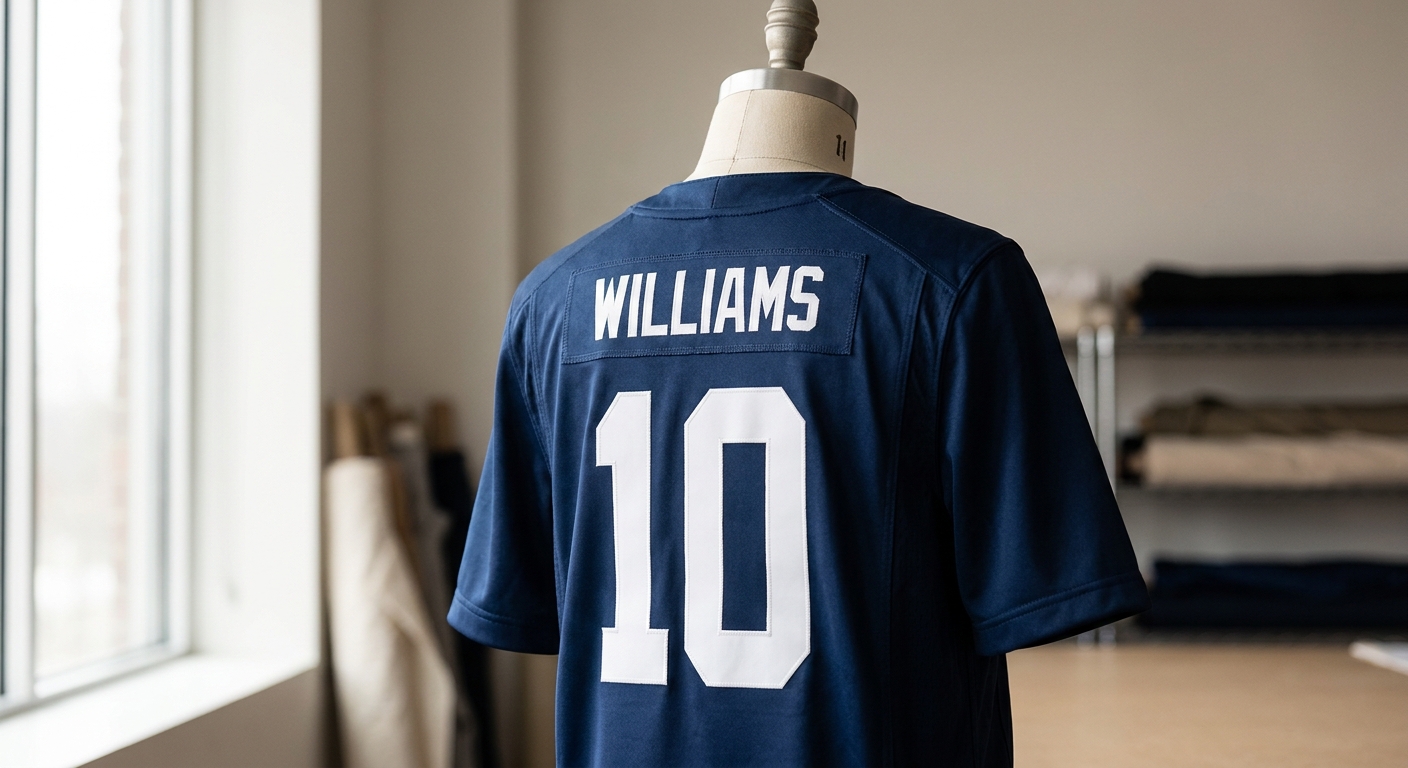
Back numbers should sit 2–3 inches below the collar seam for most jersey styles. The player name is placed above the number, typically 1–2 inches above it. This spacing leaves room for both without crowding.
Front and Sleeve Options
Many jerseys also include a smaller number on the front chest or sleeve. The placement follows league or team guidelines, but these secondary numbers are usually smaller than the back number and aligned symmetrically.
Ensuring Alignment and Centering
Names and numbers must be horizontally centered on the jersey. We check alignment and centering on every order before production, using the collar and shoulder seams as reference points.
Printing and Application Methods for Custom Names and Numbers
Different methods suit different needs, and each has trade-offs in durability, appearance, and turnaround.
Heat Transfer Vinyl vs. Screen Printing
Heat transfer vinyl is best for small batches—roughly 1–20 jerseys—because it’s quick and flexible, though less durable than screen printing. Screen printing is ideal for larger orders (25+ jerseys) and produces long-lasting results with a soft hand.
Sublimation for Full Customization
Sublimation works only on polyester fabrics, but it allows for vibrant, detailed, all-over designs. It’s a good choice when you want more than just a name and number—like a fully custom pattern integrated into the shirt.
Sewn vs. Heat-Pressed Kits: Durability Comparison
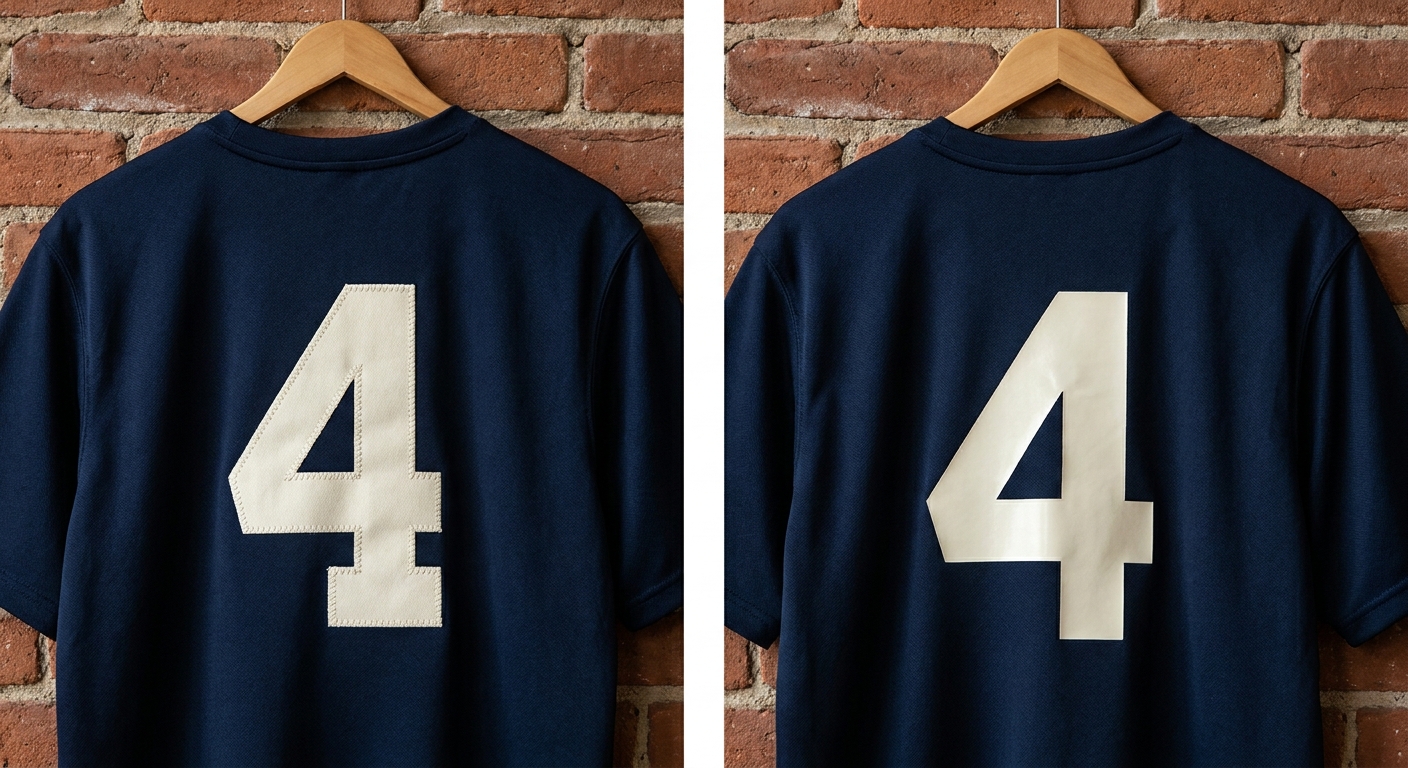
Sewn kits use official team-licensed twill cut to the exact font and color, then stitched onto the jersey for a traditional look. Heat-pressed kits look nearly identical once applied but skip the sewing step, which usually means a faster turnaround. Both can be durable if high-quality materials are used.
Preparing Artwork Files for Customization
If you’re submitting custom artwork along with names and numbers, file preparation matters. We can often work with your existing files, but getting the basics right prevents delays.
Vector vs. Raster Files: What’s Best?
Vector files (AI, EPS, SVG) scale perfectly without losing quality, making them ideal for logos and numbers. If you only have a raster image, use a high-resolution PNG with a transparent background to avoid compression artifacts.
Resolution and Color Mode Requirements
Use 300 DPI for raster images to ensure sharp text and edges. For screen printing and some digital methods, CMYK is recommended, while sublimation often uses RGB. For heat transfer vinyl, set up separate layers for each color.
File Formats Accepted by Customization Services
Common accepted formats include AI, EPS, SVG, and high-res PNG. We can advise on the best format for your specific design during order review.
Common Questions About Customizing Pro Sports Jerseys
Here are quick answers to the questions we hear most often.
Can I Add Accents or Special Characters?
Yes, in most cases. Accented letters and some special characters are available depending on the team’s approved font set. Confirm before ordering.
Is There a Limit on Name Length?
Nameplates have a fixed physical width, so very long names may be compressed or require a smaller font. We’ll flag any name that might look awkward before production.
Can I Customize a Jersey with a Retired Number?
Yes. Retired numbers are allowed for personal use. The retirement only restricts players on the team, not fans.
What If I Make a Mistake After Ordering?
Contact us immediately. If production hasn’t started, we can usually make corrections. Once printing has begun, changes may not be possible, so double-check your list before submitting.
Ready to Personalize Your Pro Sports Jersey? Can You Add Custom Names and Numbers to Blank Pro Sports Jerseys?
Yes, you can. If you have a blank pro sports jersey and want to add custom names and numbers that match the team’s official look, contact us to discuss your project. We’ll help you choose the right font, placement, and application method for a jersey that looks game-ready.